Going on vacation, I will begin posting about emotional Helene in my next segment.
Sunday, July 3, 2016

Monday, June 27, 2016
Foot Zoning vs Foot Reflexology
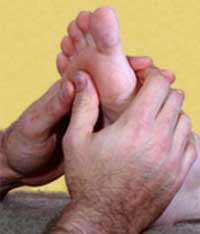
Foot zoning is different from foot reflexology basicly in their method of approach.
The feet hands and ears have the nerve endings from the rest of the body that can be worked to help the body to reboot and heal.
Zoners work in various zones of feet with precise, directed pressure to the various zones of the feet.
The Zone and Reflexologist observes the foot through discoloration, texture and tenderness what and where the body is having trouble in the body.

One theory is that reflexology works with the central nervous system. This theory builds on research done in the 1890s by Sir Henry Head and Sir Charles Sherrington, who began to show through their research that a neurological relationship exists between the skin and the internal organs, and that the whole nervous system adjusts to a stimulus.
According to the theory, the reflexologist application of pressure to feet, hands, or ears sends a calming message from the peripheral nerves in these extremities to the central nervous system, which in turn signals the body to adjust the tension level. This enhances overall relaxation, brings internal organs and their systems into a state of optimum functioning, and increases blood supply (which brings additional oxygen and nutrients to cells and enhances waste removal). It positively affects the circulatory, respiratory, endocrine, immune, and neuropeptide systems in the body.
In Foot Zoning as the practitioner massages the foot a signal point is triggered within a certain zone, a message goes to the tissue or organ effected, through a reflex arc to the spinal cord and then to the brain. Discomfort is experienced in the areas of imbalance–areas where healing is needed.
I believe that both of these footwork modalities are as effective as the practitioner performing the massage. So the most important part of either of "these" besides their name -- is who is doing the work.
I have noticed that a lot of the Zoners are like some politicians in that they are criticizing the Reflexology as being not as thorough or this or that. I HAVE NOTICE THAT IN BOTH all the areas of the foot are worked. And in fact the Reflexologist is taught to also work the lower legs, the hands and also the ears.
I'm not a foot Zoner or Reflexologist though I work the feet as part of a massage.
So what you have to decide is which method or (practitioner) works best for you.
Wednesday, June 15, 2016
LEG PROBLEMS
Massage should not be done on some medical conditions. If you have a medical condition please ask your Dr. before doing massage.
Always avoid using your thumb to execute your massage techniques as the muscles above your thumb will wear out. If you just can't help yourself be sure to get regular massage work on you thumb pad and the rest of your hand.
Always avoid using your thumb to execute your massage techniques as the muscles above your thumb will wear out. If you just can't help yourself be sure to get regular massage work on you thumb pad and the rest of your hand.
With most to all of conditions lack of blood and fluid flow will cause pain and eventually disease.
Leg pain will almost always be coming from hip problems. ie -- The hips are so tight that the bundle of nerves going down to the legs become pinched, also constricting the flow of necessary fluids to give the legs nourishment and the removal of garbage. (and kind of toxins like uric acid etc...)
So to massage the legs find not only the tension at the site of the problem but also all the muscles attached to the issue that are above the problem on the body.
Massage techniques.
Always move from the feet toward the head in most any massage. So if you are starting with the calf muscles work in long flowing motions toward the head. you can split the calf from the thigh if you want to do more detailed work which if you want to really get the tension out you should concentrate on each muscle group.
Long deep strokes coupled with kneading the individual muscles will get most tension out. You may need to do more than one session for more long term problems. (Regular massage will keep the body in a more healthy condition. Healthy eating like vegetables and a little fruit is also key to staying healthy.)
For the thighs the above paragraph works as well.
Sunday, June 5, 2016
Hip Pain
The hips have a lot of muscles that can be causing problems, so I like to hit them all.
Start with the client lying face down of prone. The glute muscle and hamstrings can be worked best with lotion. So draping is important. Work towards the head in long flowing motions. avoid working on the bones as this is unproductive.

Work around the greater trochanter and all of the hamstrings.
After working all of the muscles you can with the client lying prone, turn them over and work the quads and the psoas.

 The psoas is one of the hardest muscles to reach, but it is one of the most important for not only hip pain but low back pain as well.
The best way I've found is with the client face up or supine and going to the top of the hip bone, find the outer corner and go in toward the center about two inches. gently press down and moving slightly under the hip you will find a long ropey muscle as you can see in the photo above. Increase pressure as the client can handle it, but always be aware of your client's pain tolerance. You don't want to do any damage to them if their pain tolerance is higher than normal.
Balancing the level of the hip bones themselves is also helpful after the tension is removed from the muscles -- Balancing will be taught in the energy work segment to come in future posts.

Work around the greater trochanter and all of the hamstrings.

After working all of the muscles you can with the client lying prone, turn them over and work the quads and the psoas.

 The psoas is one of the hardest muscles to reach, but it is one of the most important for not only hip pain but low back pain as well.
The best way I've found is with the client face up or supine and going to the top of the hip bone, find the outer corner and go in toward the center about two inches. gently press down and moving slightly under the hip you will find a long ropey muscle as you can see in the photo above. Increase pressure as the client can handle it, but always be aware of your client's pain tolerance. You don't want to do any damage to them if their pain tolerance is higher than normal.
Balancing the level of the hip bones themselves is also helpful after the tension is removed from the muscles -- Balancing will be taught in the energy work segment to come in future posts.
Sunday, April 24, 2016
Back Pain
Massage should not be done on some medical conditions. If you have a medical condition please ask your Dr. before doing massage.
Most state have laws governing doing massage as a profession so if you're not a Licensed Massage Therapist check your local laws for doing massage on family and or friends without charging. Once you charge your are considered a professional.
Back pain is probably the most common complaint that we suffer.


With the client lying face down or prone, I like to work on the multifidus muscles first by standing to the side of Client and placing your thumb on the opposite side of the spine from the side you are standing.
 Next using the palm of the other hand gently but firmly press down then away from the spine.
 Next using the palm of the other hand gently but firmly press down then away from the spine.
(In elderly people the Transverse Process can be brittle, and can easily break. Use extreme caution in doing massage on the elderly. See diagram above.) Work between each vertebrae up and down at least three or four times. Then move out to the other larger muscles with palms or forearms. Foreames can be more convenient from the same side of the spine. After working both sides go to above the top of the head and with both hands using long smooth strokes with hands open and face down to finish the back massage.
I will be adding a picture to demonstrate the massage techniques.
I will be adding a picture to demonstrate the massage techniques.
Massage lotion will help in all massage techniques except for true deep tissue.
A lot of back pain can be influenced by the hips. So be sure to look at the hip post.
A lot of back pain can be influenced by the hips. So be sure to look at the hip post.
Tuesday, April 19, 2016
Earache
Most of us have had an earache at sometime in our life. It's no fun is drastically understating the obvious.
The techniques that work well for the jaw also are helpful for earache pain. By working just behind the jaw, in front and below the ear you can clear the canal that you can see in the image below.
Relieving the tension in this area can allow the eustachian tube to drain relieving most earache pain.
Work behind the jaw in every direction. Don't forget to work on the jaw hinge too as it can be holding a lot of the tension causing the problem.

Seems easy? Basicly it is, but remember to start out slow, this area is super tender, especially if you have an earache.
Tuesday, April 12, 2016
Shoulder Pain & Upper Back.
Shoulder pain and upper back pain is often caused by tension in the subscaps, or subscapularis.



To work on this area you will need to work with another person as it is almost impossible to reach on one's self. Although I have resorted to leaning on a rubber covered broom handle, which helps but doesn't get into the sub-scaps very well.
To do this work you will want to work on the area from the front and the back. It doesn't matter which way is first but for this instruction we'll start face up or supine.

Have the client raise their arm above their head or if it is too painful as far as they can. A small pillow can supportThen find the soft area in the armpit, between the pec and the subscap muscle. Very gently work your way into this area. (It is extremely tender and often very ticklish so go slow.) However to get the tension out you will need to dig deep. Work everything you can reach, forward, backward, up, down, and around. Grab hold of the edge of the pec muscle and kneed this muscle between your thumb and fingers.
Then turn the client over and work from this angle.
You may have to do this in stages but the more tension you can get out the more releaf you're going to achieve.
Years agoI had an old farmer who would come to me once a year when his shoulder would freeze up. I would spend the whole hour working on this area coupled with the traps and deltoid. To say the least this was an extremely painful endeavor for my client. I begged him to come more often in order to avoid going through so much pain in order to relieve his shoulder problem but to no avail. He would grit his teeth and bare the pain of this technique knowing that when we were through he would once again have the use of his shoulder.
So I strongly recommend that you do this work in stages. about every other day until the pain is gone.
If you know how to do energy work send energy into the area as you slowly move forward into the muscle. This cuts the pain a great deal.
* Once again remember that there are medical conditions that shouldn't have massage. ie Cancer and others. If you have a medical condition please talk to your doctor before getting massage work done.
Subscribe to:
Posts (Atom)